

Why Getting a Vancouver Building Permit Right Matters for Your Project
A Vancouver building permit is required for most construction projects on private property before work begins, including new builds, renovations, additions, and laneway homes. The process ensures your project complies with the Vancouver Building By-law, which covers life safety, livability, accessibility, and sustainability.
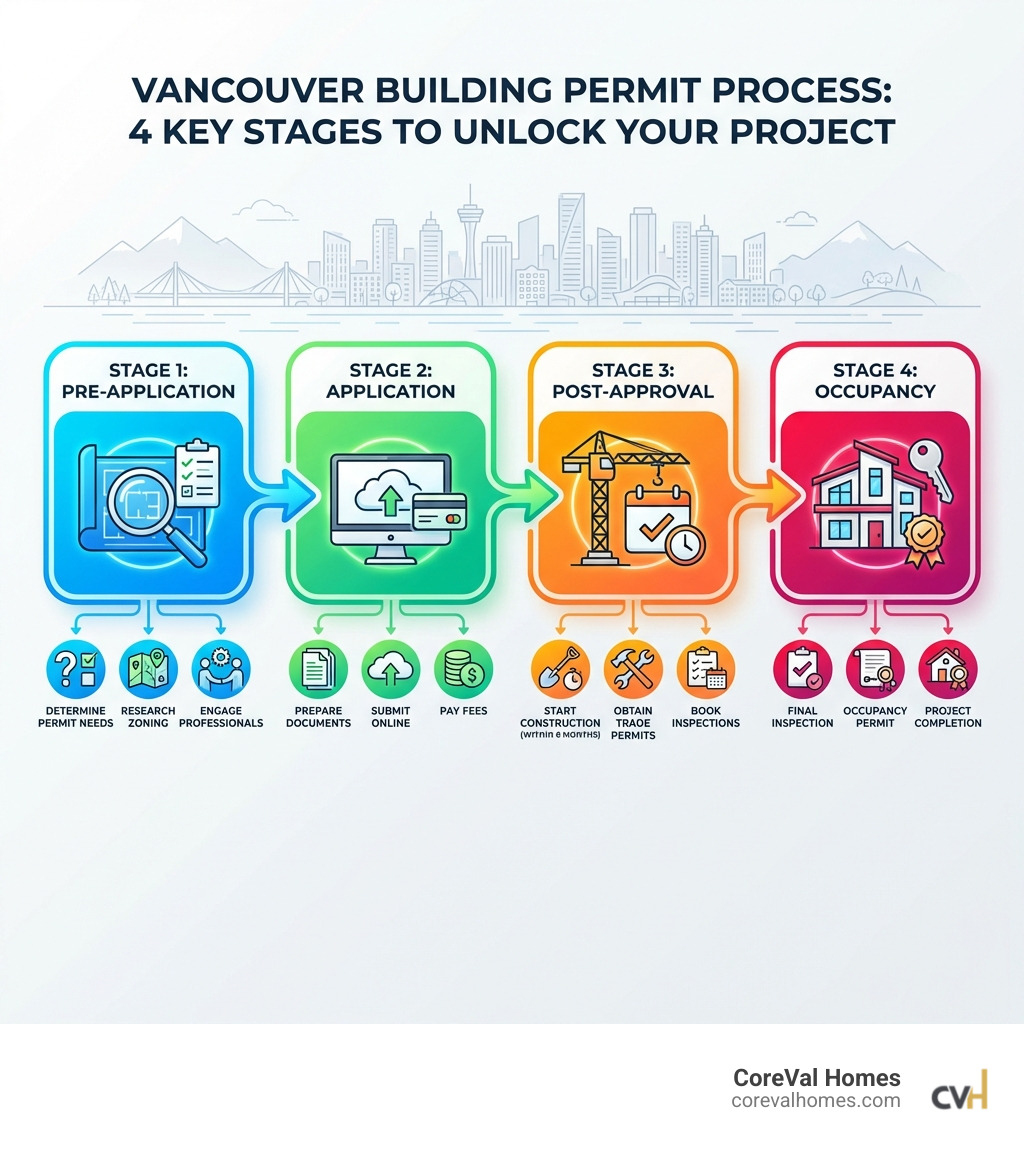
Quick Guide to the Vancouver Building Permit Process:
- Determine permit needs – Check if you need a building permit, development permit, or both.
- Prepare application – Gather drawings, documents, and professional digital seals in PDF format.
- Submit and pay – Upload your application online and pay fees through your permit account.
- Track and respond – Monitor application status online and address any staff requests.
- Receive permit – Download your issued permit and approved drawings electronically.
- Start construction – Begin work within 6 months with approved documents on-site.
- Book inspections – Request required inspections at key project stages.
- Secure occupancy – Obtain a final inspection and occupancy permit if needed.
Understanding the permit process is essential to avoid costly delays and ensure compliance. The City of Vancouver uses an electronic-only system, allowing 24/7 online submissions. However, this system has specific technical requirements—such as PDF-only files, size limits, and digital seals—that can be challenging for new applicants.
For those planning a construction project, navigating zoning regulations and documentation can feel overwhelming. With the right preparation, you can move through the process efficiently.
I’m Gordon Guthrie, founder of CoreVal Homes. As a third-generation builder and licensed realtor, I have decades of experience guiding clients through the Vancouver building permit process for custom homes, laneway houses, and major renovations. My background provides a unique perspective on how to steer Vancouver’s permitting requirements while maximizing your property’s development potential.
Before You Apply: Understanding Permit Requirements
Before filling out any forms, the first step is to determine if your project needs a Vancouver building permit and, if so, what type. Many projects, from minor renovations to demolitions, fall under the City of Vancouver’s permitting requirements.
Most construction projects, changes of land use, or changes in occupancy on private property require a building permit. This includes new structures, additions, interior alterations, demolitions, and even signs. The Vancouver Building By-law’s goal is to ensure all buildings meet standards for life safety, livability, accessibility, and sustainability.

Starting work without the necessary permits can lead to fines, delays, and orders to remove unapproved work. Early research is critical for a smooth project. For more details, visit the City of Vancouver’s official website: When you need a permit.
When is a Development Permit Needed?
For some projects, you may need a separate development permit before you can apply for a building permit. This is common for larger projects, changes to land use, or requests for zoning relaxations. Development permits regulate the built form of a neighbourhood to ensure it remains livable and functional.
A development permit is typically required for large-scale projects, projects seeking zoning relaxations, or those involving specific land uses. If your project impacts the zoning envelope or changes a building’s use, a development permit is likely your first step. The process is governed by the City’s Zoning and Development By-law. After a development permit is issued, you generally have 12 months to apply for your building permit before the development permit expires.
Engaging a qualified design professional early is wise, especially when a development permit is needed. If you’re unsure, the City of Vancouver provides guidance: Get a development permit. For a deeper dive into zoning, see our article: Decoding Zoning Categories in Vancouver.
Projects Requiring a Building Permit
If your project doesn’t need a development permit (or you’ve already secured one), you’ll still need a Vancouver building permit for most construction work. A permit is necessary if your project alters a building’s structure, changes its footprint, or significantly modifies the interior.
Common projects that require a building permit include:
- New Buildings: Single-family homes, duplexes, laneway homes, garages, and carports.
- Additions and Alterations: Adding a new story, extending a room, or building a deck. Interior alterations that move structural walls or create secondary suites also require a permit.
- Demolitions: Both partial and full demolitions of a structure.
- Specific Structures: Swimming pools, retaining walls over a certain height, and signs.
The Vancouver Building By-law guides all these projects, setting standards for safety, accessibility, and energy efficiency. No work can begin until your building permit is issued. You can learn more about the by-law here: Vancouver Building By-law.
Your 4-Step Guide to the Vancouver Building Permit Application
This 4-step guide breaks down the Vancouver building permit application process. The City of Vancouver’s electronic-only submission system is efficient but has specific digital requirements. This section details the core process from document preparation to submission and tracking.
Step 1: Prepare Your Digital Application Package
The shift to electronic submissions requires precise digital formatting. All documents and drawings must be prepared correctly before you can apply.
Key requirements for your digital application:
- File Format and Size: All files must be in PDF format, and individual files cannot exceed 300MB. Large drawing sets may need to be split by discipline (e.g., architectural, structural).
- Drawing Requirements:
- Vector Format: Vector-based PDFs are preferred for clarity. Scanned paper drawings may be rejected.
- Title Block Space: Each drawing needs a blank space in the title block (at least 2″ wide by 3″ tall) for the City’s official stamp.
- Legibility: Drawings must be legible and to scale.
- Professional Seals and Digital Signatures: Documents requiring professional certification (from architects or engineers) must have both a professional seal and a valid digital signature. A scanned seal is not sufficient. See the Engineers and Geoscientists British Columbia guidelines for more information.
- File Naming: Use logical file names (e.g., “Architectural-Plans-Level1.pdf”) to help streamline the review.
- No Locking or Passwords: PDF files must not be locked or password-protected, as city staff need to apply stamps and signatures.
Thoroughly preparing your digital package is the first step to an efficient application. For those interested in smaller projects, our Guide to backyard studio permits touches on similar steps.
Step 2: Submit Application and Pay Fees
Once your digital package is ready, you can submit it through the City of Vancouver’s online portal. The primary method is your online permit account, which serves as the central hub for communication and document sharing.
- Online Submission: Log into your online permit account to upload your drawings and documents.
- Fee Calculation: After submission, the city will review your application for completeness and calculate the permit fees based on your project’s scope.
- Payment Methods: You can pay your fees in several ways:
- Online by Credit Card: The most efficient method, available only to the permit holder or applicant.
- In Person: At the Development and Building Services Centre (515 W 10th Ave). Note the business hours and the $200 cash payment limit.
- By Mail: Payments can also be mailed.
Prompt submission and payment will move your application into the review stage. You can Log in to your account to begin.
Step 3: After You Submit: Tracking Your Vancouver Building Permit Status
After you submit, you can actively track your application’s progress. The process is a collaboration between you and the City, so expect some back-and-forth communication.
Here’s what to expect:
- Application Review: City staff will review your documents for compliance with the Vancouver Building By-law.
- Staff Communication: Staff may contact you through your online permit account with questions or requests for more information. Responding promptly is key to avoiding delays.
- Online Status Tracking: You can track your application’s status 24/7 online by address or permit number.
- Responding to Deficiencies: If issues are found, you will need to submit revised drawings or additional information.
We monitor our clients’ applications to provide strategies that reduce permit delays. You can Search for a permit or application to check its status.
Step 4: Receive Your Issued Permit
Once your Vancouver building permit application is approved, the City will issue your permit electronically.
- Electronic Issuance: You will be notified by email that your permit has been issued.
- Download Documents: Log into your online permit account to download the official permit and the City-approved drawings, which will bear the City’s stamp.
- No In-Person Pickup: The electronic system means you don’t need to visit a city office to pick up your documents.
Receiving your permit is the green light to prepare for the construction phase.
After Issuance: Managing Construction, Inspections, and Amendments
Once your Vancouver building permit is issued, the next phase involves managing construction, inspections, and any necessary amendments. Staying organized during this stage is key to avoiding setbacks.
Kicking Off Construction and Amending Your Permit
Before construction begins, there are a few critical steps and considerations for managing your project.
- Starting Work: The 6-Month Validity Period: You must begin work within six months of the permit’s issuance date. If not, the permit will become void, and you will have to reapply.
- On-Site Documents: During construction, you must have one printed copy of the City-approved permit and one full-sized paper set of the City-approved drawings available on-site for inspectors. These documents must display the City’s accepted stamp.
- Amending a Permit: If your plans change during construction, you must submit an amendment request for your issued building permit.
- Online Amendment Request: If you are the listed applicant, you can request an amendment through your online permit account. You will need to describe the changes and upload supporting documents.
- If You’re Not the Listed Applicant: Contact the Development and Building Services Centre online for guidance on how to request an amendment.
- Review and Issuance: The request will be reviewed, and upon approval, an amended permit will be issued.
Efficiently navigating these post-issuance steps is crucial for your project’s timeline. At CoreVal Homes, we specialize in managing these complexities to keep projects on track. Learn more about How to avoid permit delays.
Booking Inspections and Securing Final Permits
Inspections are a mandatory part of construction, ensuring your project follows the approved plans and safety standards. Most projects also require separate trade permits and inspections.
- Required Trade Permits: These are typically obtained by licensed contractors and may include:
- Electrical Permits
- Plumbing Permits
- Gas Permits
- Mechanical Permits (for heating/cooling systems)
- Fire Sprinkler Permits
- Sewer and Water Connection Permits
- Booking Inspections: Inspections are required at key construction stages (e.g., foundation, framing). You or your contractor must book them through your online permit account. Work cannot proceed past certain milestones until the required inspection is passed.
- Final Inspection and Occupancy Permit: A project is considered complete after a successful final inspection. For most new buildings, an occupancy permit is also required. This permit confirms the building is safe, compliant, and ready for use. You cannot legally occupy the structure without it.
Frequently Asked Questions about Vancouver Building Permits
Here are answers to some of the most common questions about the Vancouver building permit process.
How long does it take to get a Vancouver building permit?
Processing times for a Vancouver building permit vary widely. There is no fixed timeline, as the process is a collaboration between the applicant and the City. Key factors influencing the timeline include:
- Project Complexity: Simple renovations are generally faster than new custom homes.
- Application Completeness: A complete and accurate application is crucial. Deficiencies cause delays.
- City Workload: The volume of applications at the Development and Building Services Centre can affect review times.
- Responsiveness: How quickly you respond to staff requests for information impacts the overall speed.
The City’s electronic processes aim to improve efficiency, but preparation and patience are still essential. For more on construction trends that can affect timelines, see the City’s Statistics on Construction Activity. Our experience allows us to provide strategies to minimize these delays.
What are the digital submission requirements?
The City’s electronic-only process has mandatory digital requirements for all Vancouver building permit submissions:
- File Format: All documents must be in PDF format.
- File Size Limit: Individual PDF files cannot exceed 300MB.
- Drawing Quality: Vector-based drawings are preferred. Each drawing must have a blank space (min. 2″x3″) in the title block for the City’s stamp.
- Professional Digital Seals: Documents requiring professional certification must have both a professional seal and a valid digital signature. A scanned image is not acceptable.
- No Password Protection: Files must not be locked or password-protected to allow city staff to apply their stamps.
Adhering to these specifications is critical. The City provides a detailed Electronic permit applications guide.
Where can I find official forms and checklists?
The City of Vancouver centralizes all official forms and checklists on its website to help applicants prepare. These resources are essential for understanding the specific requirements for your project.
Key resources include:
- Building Permit Application Form
- Project-specific submission checklists (e.g., for new homes, renovations, laneway houses)
- Informational bulletins on by-laws and technical requirements
- Guides for using the online permit account
Using the correct, up-to-date forms is a cornerstone of an efficient application. You can access many of these resources directly from the City’s building permit page: Find forms and checklists here.
Conclusion
Navigating the Vancouver building permit process is an intricate but essential step for any construction project. From understanding initial requirements to preparing a digital application, tracking its status, and managing inspections, each stage requires attention to detail and knowledge of City regulations.
At CoreVal Homes, our expertise in custom homes, laneway houses, and multi-generational builds gives us deep insight into Vancouver’s permitting landscape. We offer insider strategies to reduce permit delays, making efficient project initiation our specialty.
A well-managed permit process is the foundation for a successful project. By following this guide and partnering with experienced professionals, you can ensure your project moves smoothly from concept to completion.
To learn more about how zoning affects your property, explore our guide on navigating Vancouver’s zoning and land use strategies.